
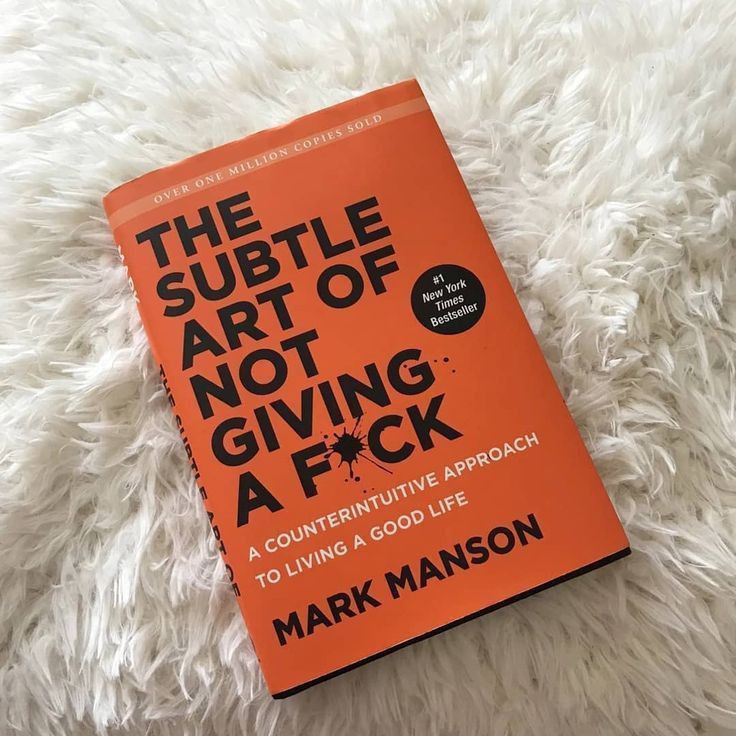
At 9:14 p.m., someone who wants to build a business is watching another founder announce a launch. The comparison makes the goal feel urgent; the thought of selling, hearing no, and doing the same small job again tomorrow feels less attractive. Mark Manson’s *The Subtle Art of Not Giving a F*ck* starts at that split: wanting the result is easy; choosing what you are willing to care about is the harder decision.
The book’s title sounds like a case for indifference. Its better lesson is almost the opposite: attention is limited, so choose the people, standards, and problems that deserve yours. The point is not to care about nothing. It is to stop letting every audience, comparison, and passing irritation set your priorities.
The Book in 60 Seconds
Mark Manson’s 2016 book is a blunt, story-led argument about values, pain, responsibility, uncertainty, and the limits of control. Its central claim is that a good life does not come from removing every difficult feeling. It comes from choosing worthwhile problems and responding to them according to values you respect.
Manson pushes against the usual promise of constant positivity. A goal carries a cost: the work, risk, rejection, boredom, or difficult conversation that comes with pursuing it. If you only want the imagined reward, you may be attached to the image of the goal rather than its daily reality. The question is not only what you want; it is what you are prepared to practise.
What pain do you want in your life?Mark Manson, “The Most Important Question of Your Life,” adapted from The Subtle Art of Not Giving a F*ck, 2013
That question is the book in miniature. Manson’s original essay expands it with examples of the hidden costs behind work, relationships, and ambition.
The Central Model: Choose the Problems That Match Your Values
Every meaningful direction includes friction. Building strength includes repeated training and recovery. A close relationship includes honest conversations and repair. A serious craft includes visible mistakes and long stretches when nobody notices. Those costs do not prove the goal is wrong; they are part of what choosing it means.
Manson’s model is a selection rule: choose a direction because the values behind it matter, then accept the ordinary problems that come with acting on those values. Do not use discomfort alone as evidence that you should quit. Also do not use discomfort as proof that a goal is noble. First ask what the struggle serves.
The distinction matters because goals can be borrowed. You may say you want a promotion when what you want is respect, security, or freedom over your time. Those needs might be served by the promotion—or by a different role, stronger boundaries, or a smaller business. Name the value before you lock onto one public symbol of success.
1. Audit the Value Beneath the Goal
A value is the standard you use to decide what counts as a good move. ‘Be admired’ depends on other people’s reactions. ‘Keep promises to clients’ describes behaviour you can choose. ‘Never fail’ is impossible to maintain. ‘Review what failed and adjust’ gives you a repeatable next step.
Manson argues that values differ in quality: some are within your influence and can be measured honestly; others depend on status, certainty, or control over people. This is a useful test, not a clinical scale. Ask whether your standard points to a behaviour you can practise, whether it remains sensible after a setback, and whether it treats other people as people rather than props.
Take the wish to ‘be successful.’ It gives you no instruction at 10 a.m. Replace it with a value such as making useful work, telling the truth about a missed deadline, or improving one skill. Those standards can guide a calendar. A title or applause cannot tell you what to do next.
2. Separate Responsibility from Blame
The book’s responsibility argument is easy to misuse. Responsibility for your response does not mean you caused every event, deserved mistreatment, or can control another person’s choices. It means looking for the part of the next move that is yours, while still naming unfairness, limits, and harm accurately.
You are responsible for everything you do in your life.Mark Manson, “The Most Important Belief You Can Have,” MarkManson.net, adapted from the book’s responsibility argument, 2017
Read that as agency over your actions, not blame for everything that happens. Manson makes the distinction explicitly in his article about responsibility: you may not be responsible for an event occurring, but you can still decide how to respond. In situations involving abuse, illness, discrimination, or unsafe conditions, seeking help and protection can be the responsible move.
This reframing prevents two dead ends. ‘None of this is my fault’ can be true and still leave you without a next step. ‘Everything is my fault’ is usually false and can keep you trapped in shame. A more useful question is: what is not under my control, and what response is available to me now?
3. Let Discomfort Give You Information
Avoiding every unpleasant feeling can shrink your choices. If you never risk criticism, you may never publish the work. If you avoid awkward conversations, resentment can make the decision for you. The answer is not to seek pain for its own sake. It is to distinguish useful discomfort from a warning that a boundary, method, or goal needs to change.
A useful struggle tends to connect to a chosen value and a concrete action. Rewriting a proposal after thoughtful feedback may serve craft. Staying in a harmful situation to prove toughness does not become wise merely because it hurts. The book’s challenge works best when paired with judgment: pain is a cost to evaluate, not a score to maximize.
This also changes how you interpret failure. A failed attempt can show that the plan needs revision, the skill needs practice, or the desired outcome was not important enough to justify the cost. None of those conclusions require turning one result into a verdict on your identity.
A practical way to make that distinction is to review the attempt at the level of behaviour. What did you try? What response did the environment give you? Which part can be changed before the next attempt? ‘I am not cut out for this’ turns a single result into a permanent identity claim. ‘That pitch did not make the value clear’ gives you something testable. The book’s emphasis on uncertainty is useful here: confidence is not a prerequisite for acting, and an outcome is not fully under your control. You can still choose whether to prepare, ask for feedback, make another attempt, or update the goal when the evidence changes.
The Four-Question Care Filter
Use this short filter when a goal, request, or comparison is consuming attention. Write answers in plain language; do not turn it into a life-purpose exercise.
- Name the real outcome. Describe what you want without the status label. What changes in your ordinary week if you get it?
- Name the recurring cost. What work, uncertainty, rejection, or boundary-setting will the path keep asking of you?
- Choose the value. Which behaviour do you want the path to express, even when nobody praises it?
- Pick your next controllable action. Choose one step you can take without controlling another person’s response.
If the reward matters but the costs do not, you may need a different route—or a more honest goal. If the value matters and the costs are acceptable, protect one concrete action. The filter does not guarantee success. It helps you spend effort deliberately.
A Normal Example: The Promotion
Imagine a project lead wants a promotion. The visible result is a new title and higher pay; the recurring costs may include more difficult decisions, feedback, hiring conversations, and less time doing individual craft work. Those costs may be worth accepting if the person values building a team and taking responsibility for larger outcomes.
But if the real need is more autonomy, the promotion may be a poor solution. The person could test a different role, negotiate decision rights, or develop a specialist path. The point is not to reject ambition. It is to find out whether the struggle attached to this specific goal serves the value underneath it.
For the next two weeks, they could schedule one focused block to build the skill the promotion requires and one conversation with a manager about the role’s actual responsibilities. That produces evidence. It is more useful than refreshing a career feed and measuring a private life against someone else’s announcement.
Where People Misread the Book
First, caring less is not the same as becoming cold. The book asks you to choose what matters, which means care, commitment, and follow-through remain central. Apathy avoids responsibility; deliberate attention accepts a smaller number of meaningful responsibilities.
Second, ‘choose your struggle’ is not a command to tolerate preventable harm. Chronic exhaustion, coercion, unsafe work, or worsening health are not proof of character. Change the conditions, get support, or leave when that is the sound decision. Discipline should protect a worthwhile life, not consume it.
Third, the book’s blunt voice is a style, not a licence to dismiss other people’s needs. Boundaries can be clear without contempt. You can decline a request, accept a consequence, and remain respectful. ‘I do not care what anyone thinks’ is often just another attempt to control the room’s reaction.
Finally, values are not fixed forever. A choice that fit one season may stop fitting when health, family, or circumstances change. Review the cost and the value together. Changing direction after learning is different from quitting automatically whenever work becomes uncomfortable.
Try the Filter for 14 Days
Choose one active goal or commitment. Write the outcome, recurring cost, value, and next controllable action. Put that action in a realistic calendar block, with enough room for your existing responsibilities and recovery.
For the next 14 days, record whether you did the action and what got in the way. Do not score yourself by mood or by whether other people noticed. At the end, ask: does this work still serve the value I chose? Is the cost acceptable? Should I continue, change the method, renegotiate, or stop?
Rize AI can protect the action as a block around existing commitments. It cannot choose your values, decide which cost is acceptable, or tell you whether a situation is safe. That judgment remains yours.
The rules worth keeping
Spend attention on people and problems that serve values you actually endorse.
A goal includes recurring costs; decide whether those costs fit the life you want.
Separate what happened to you from the next action you can choose.
Useful discomfort may be part of growth; harm is a reason to protect or change conditions.
Continue, adjust, or stop when evidence shows the goal no longer serves what matters.