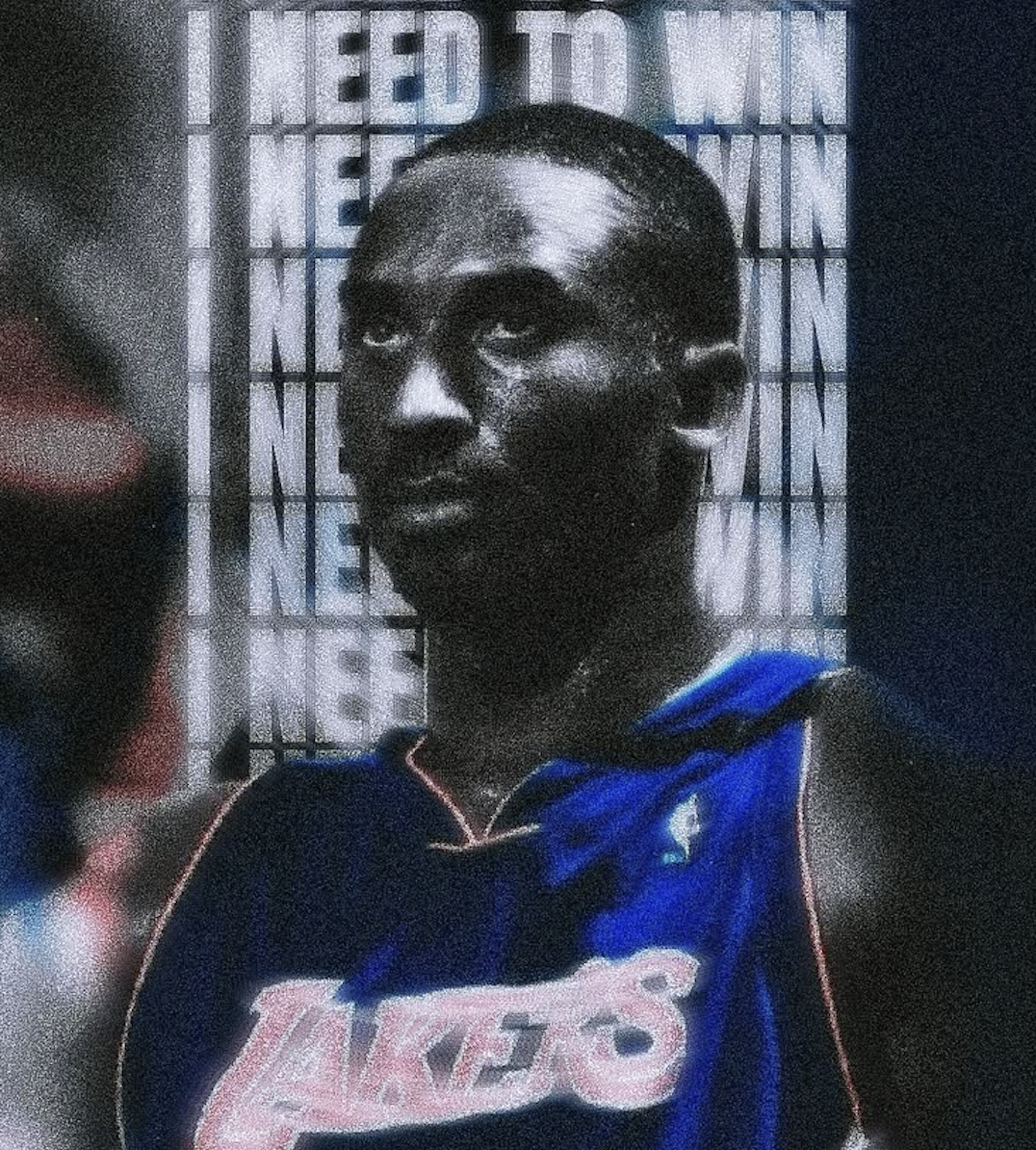
Before a game, Kobe Bryant did not need another motivational speech. He needed a repetition he could trust. His famous pre-game shooting routine was not a performance for the cameras; it was a way to arrive with one part of the game already rehearsed when pressure made everything else noisier.
Most people hear “Mamba Mentality” and picture punishment: earlier alarms, harder workouts, a life with no room for rest. That is the shallow version. The transferable part is more useful: choose one thing that matters, practise it with full attention, then review the evidence instead of your mood.
This matters because modern work rewards the appearance of range. You can answer messages, research five ideas, join a call and make a plan before lunch. Yet the one skill that would actually change your result—selling, writing, designing, managing a hard conversation—often gets whatever attention is left.
What Was Kobe Bryant’s Mamba Mentality?
Mamba Mentality was Bryant’s name for a competitive approach built around preparation, concentration and a willingness to meet discomfort. It was never simply “try harder.” On the court, he reduced the job to the next possession, the next read, the next shot. That reduction is the useful rule for anyone whose work becomes messy under pressure.
I focus on one thing and one thing only – that’s trying to win as many championships as I can.Kobe Bryant, Nike Mamba Mentality: Focus
His quote sounds extreme because championships are an extreme target. Do not copy the target. Copy the narrowing. Bryant had a north star, but his daily work had smaller objects: footwork, shooting angles, film, conditioning, decisions in a particular defensive look. A big ambition only becomes useful when it tells you what to practise today.
That distinction protects you from the common failure of ambitious people: setting a huge goal, feeling energised for two days, then bouncing between every possible tactic. Focus is not doing one thing forever. It is deciding what deserves the next clean block before the world decides for you.
The Rule Underneath the Myth
Bryant’s preparation worked because it created feedback. Repetitions were not vague effort. A shot went in or it did not. Footwork held up or it did not. Film revealed a pattern or it did not. In ordinary work, you need the same honesty. “Work on my business” is not a practice target. “Write three customer questions and test them on two calls” is.
Kobe then embraced a no-excuses mindset to preparation and execution — Mamba Mentality, he later called it.NBA.com, ‘From start to end, deep hunger and desire to be the best drove Kobe Bryant,’ 2020
No-excuses does not mean no constraints. It means you stop using a vague constraint as a reason to skip the smallest useful rep. You may not have a gym, a team or three free hours. You can still make one sales call better, edit one page with care, practise one opening line, or protect twenty minutes for a difficult proposal.
The strongest version of the rule is simple: decide what skill creates the next level of your work, create a repeatable rep, and make the rep visible enough to judge. You do not need to feel like Kobe Bryant. You need to know what “better” looks like before you begin.
A useful practice target is narrow enough to fail honestly. “Become more confident” cannot tell you what to do at 9:00 tomorrow. “Open the next client call by naming the decision we need” can. Narrow targets feel less glamorous because they remove the fantasy of instant transformation. They are also where skill is built.
The same rule applies when you are already good. Once a skill feels familiar, the temptation is to repeat it on autopilot and call that discipline. Bryant’s reputation came from detail: a repeat had a purpose. Before each block, decide what one detail you are testing. Pace, clarity, sequence, form, preparation or follow-through all count when you can see them.
Run the One-Skill Focus Reset
Pick one skill that keeps showing up in your work. Not a goal, a skill. A founder might choose clearer customer calls. A creator might choose stronger openings. A manager might choose making decisions in writing. An athlete might choose recovery after hard sessions. If you cannot practise it in a small block, it is still too broad.
Next, write a rep that produces evidence. For clearer calls: record the one question you will ask, then note the answer you receive. For writing: produce three headline options and choose one by a stated rule. For decision-making: name the decision, the evidence needed and the deadline. The point is to give attention somewhere concrete to land.
Protect a twenty-minute block for the rep. Remove the inputs that split it: notifications, chat tabs and the phone within reach. Start badly if you have to. A clean rep is not one that feels impressive; it is one where you stayed with the chosen skill long enough to learn something about it.
What a Normal Person Can Copy
Imagine you lead a small team and keep leaving meetings with unclear owners. Instead of trying to become a better leader everywhere at once, use the focus rule for one week. Before each meeting, write the one decision it must produce. At the end, name the owner and the next action aloud. Afterwards, note whether the work moved without another follow-up.
That is a Mamba-style rep without the mythology. You chose one high-leverage skill, made the standard observable and repeated it under real conditions. The result may be awkward at first. Good. Awkwardness often means you are finally seeing the part of the craft that used to hide behind busyness.
Four Questions Before You Practise
Ask yourself: What single skill would make the next month easier? What is one rep I can finish today? What evidence will tell me whether it improved? What distraction usually steals this block? These questions turn “be more disciplined” into a decision you can actually keep.
What Not to Copy From Kobe
Do not copy elite volume, sleep sacrifice, pain tolerance or the idea that every relationship must lose to the goal. Bryant’s career was built inside professional support, enormous talent and a competitive sport with clear scoreboards. Your work may need collaboration, rest and range. Intensity without recovery turns a good rule into a short-lived identity.
Also do not confuse being hard on yourself with having a standard. A standard says, “I will run the rep and review it honestly.” Self-punishment says, “I am useless unless this is perfect.” The first creates learning. The second makes you hide from the work that would teach you.
Try It for Seven Days
For seven days, run one twenty-minute rep on the same skill. Keep a tiny record: what you practised, what happened and the one change for tomorrow. Do not add a second skill when you get bored. Boredom is often the moment before a practice becomes specific enough to improve.
At the end of day seven, look for proof, not a personality change. Did the rep start faster? Did you see a repeated mistake? Did the chosen skill become easier to describe? If yes, keep it for another week or increase the quality of the rep. If no, shrink the rep until the feedback is clear.
The goal is not to become a machine. It is to become more reliable when the work matters. One deliberate repetition will not change a career. A protected practice loop, repeated and adjusted, changes what you can trust yourself to do when the pressure arrives.
- Name one skill tonight. Choose something you can practise, not a broad goal you can only worry about.
- Schedule one twenty-minute rep. Give it a real place before messages claim the day.
- Write the evidence rule first. Decide what success or learning will look like before the rep begins.
- Review one adjustment. Improve the next repetition instead of restarting the whole system.
The rules worth keeping
A specific skill creates more progress than trying to improve your whole life at once.
Practise in a way that gives you evidence, not just the feeling of effort.
Remove the inputs that turn a focused rep into another switching session.
Let what happened in the rep guide tomorrow’s adjustment.
Borrow Kobe’s focus, not elite volume, sleep sacrifice or self-punishment.